

The Problem With Always Being Right
Letting Go Without Giving Up When You're Gifted and Justice-Sensitive

“That’s not fair!” is the oft-heard battle cry of the gifted child.
Whether rules are unevenly applied in a game, a sibling gets away with something you don’t, or you are unfairly reprimanded in school, many bright children struggle to tolerate routine injustices—big or small.
That justice sensitivity doesn’t evaporate just because children grow older. Gifted adults often remain stubbornly allergic to injustice, from difficulties tolerating corporate hierarchies to anger at political decisions that clearly benefit only the few. We are not, on the whole, a group of people who go along to get along—even when it hurts us.
Yet bright minds are not merely frustrated by unfairness. We often have visceral, painful reactions to being wronged. We feel our chests tighten as we ruminate endlessly, for months on end, about narcissism, inequality, or carelessness.
We’re sad because others can’t or won’t see what we see. Sad that we can’t make a bigger difference in the world. Sad that spotting problems easily doesn’t make us equipped to fix them. We are human, just like everyone else.
I’ve spent much of my career thinking about justice sensitivity in the gifted because it’s often the one feature of our intellect that really gets us into trouble. Questioning authority, refusing to go along with things, speaking up when we see something unfair—these are frequently our greatest strengths but also our greatest weaknesses.
Justice sensitivity can help us enact necessary change, look out for others' needs, and create a more functional society. But when it is misunderstood or misdirected, it can result in us being labeled the disobedient child, a bad influence, or a problem employee. These negative labels in childhood are often how we come to believe we are too much, a self-concept that we carry into adulthood.
Why is it that bright folks in particular—who can logically predict the outcomes of their actions—are so undeniably stubborn in their pursuit of justice, even when it causes personal harm? Is there a way for us to manage this trait effectively, or to channel it into something useful? And how do we show our strong-willed children that they can make a difference—without always having to fight every battle?

Justice Sensitivity as Meaning-Making
What I’ve come to believe about myself, and about others who have similarly high levels of justice sensitivity, is that this is fundamentally an issue of wanting to understand. We want to believe there is logic to our world and that we can reliably predict the actions of those around us. We want to know what’s coming next, that everything works out in the end, and to have a good reason for why we’re all here.
For better and for worse, bright minds are hyper-efficient logic machines. We’re wired for pattern recognition and efficient reasoning, even when that reasoning becomes overextended and even harmful. We long for continuity, clarity, and coherence in an endlessly chaotic world. If we can make sense of the senseless, control the uncontrollable, and ensure fairness, then perhaps we will feel safe. Without this, how else are we to tolerate the painful reality of an increasingly random universe?
I recently shared in one of my gifted adult groups that the constant need to fight injustice is like a tiger thrashing against the bars of a cage. We know, cognitively, that accepting some level of injustice might allow us to stop flailing and to have a modicum of peace. We also recognize that acceptance is all that we can realistically manage when so many variables are out of our control. Yet we continue to push at the boundaries of what change is possible, even when they won’t budge, desperately hoping that somehow we can create a different outcome.
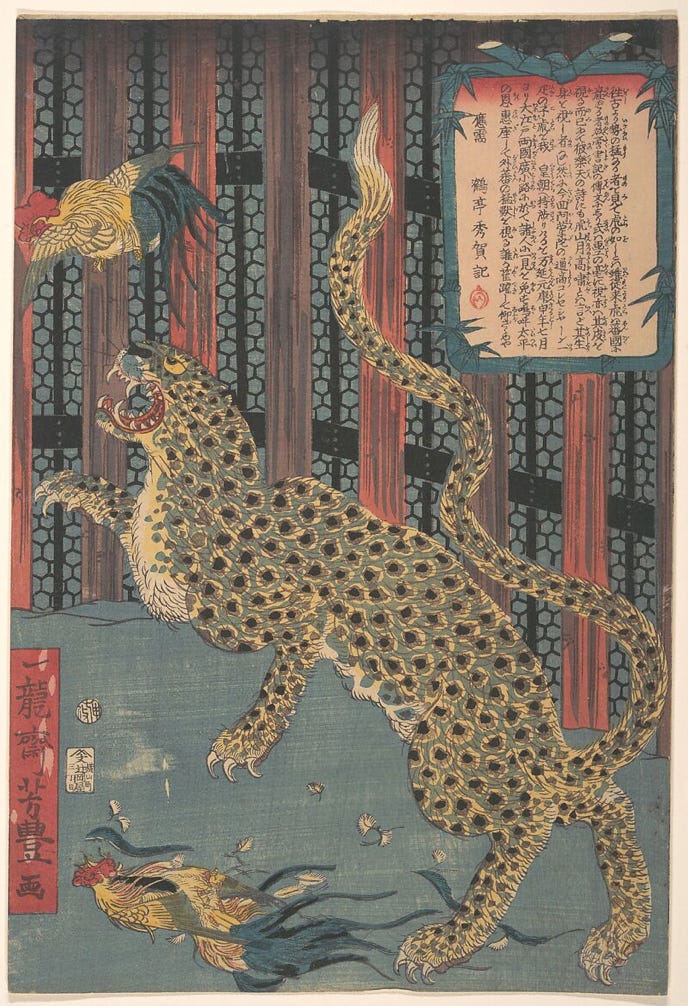
For the justice-sensitive, acceptance often doesn’t feel like a choice we can make. We are fundamentally incapable of sitting idle, resting, and letting things slide, because acceptance feels like admitting defeat. We worry that by accepting our circumstances, we are people who no longer care; that we are giving up something essential to our being. We are both powerful and powerless in our fighting.
You Can Have Truth, Or You Can Have Peace
Bright minds so often despair because we are acutely aware of our vastness and our smallness all at once. The curse of giftedness is the ability to envision a world that is safer, happier, and kinder than the one we now live in—and even to see how we might get there—yet being unable to fix it all on our own.
Though we don’t wish to admit it, ego is often a primary driver of our sense of injustice. We believe we are right and others are therefore wrong. We believe that unfair situations are ours to control and should unfold in a certain way, rather than accepting what actually is. Those familiar with Buddhist principles will recognize that it is not the situation itself but the beliefs we hold that cause our ultimate suffering. Yet it can be incredibly difficult to shake those beliefs.
When we readily perceive imbalances and care intensely about others, we often feel responsible for correcting injustices. This is particularly true when we choose to speak up about the things we see, but others don’t believe us. In these instances, if we don’t take the initiative to address the issue, then who will?
The phenomenon of seeing without being believed is sometimes referred to as the Cassandra Complex, named for the Greek priestess Cassandra, who was given the gift of prophecy but was cursed by the god Apollo to have her predictions never believed.1 In modern parlance, Cassandra was doomed to an eternity of gaslighting by everyone around her.

Many bright minds identify with the Cassandra Complex in some form. We believe we see the world as it really is, while others continuously deny reality. Unsurprisingly, smart individuals tend to hold very strong opinions about the world—often thoughtfully and meticulously formed. Ironically, however correct these beliefs may be, they only add to our suffering when they lead us to feel constantly wronged by others.
Interestingly, research suggests that gifted individuals tend to score significantly higher on the personality trait of openness to experience,2 which means they exhibit greater cognitive flexibility when evaluating and holding new information, ideas, and viewpoints. We can maintain strong views of our own, but empathize with the contradictory views of others, “holding the grey” in a black and white situation. We gravitate towards nuance, subtlety, and layered thinking.
While that is beneficial in many settings—we can never be wrong if we can always change our minds—this can also create a certain level of internal unrest and confusion. Holding many perspectives at once can feel expansive and richly layered, but it can also feel destabilizing.
I suspect this is why many people become entrenched in their world views; it feels good to be right while everyone else is wrong. We feel safest when we have the “correct” viewpoint. Yet the common adage is undoubtedly true: you can be right, or you can be happy—but not both.
The Star Thrower
So, what’s a bright, justice-sensitive person to do?
With clients, I often share a short reading by Loren Eiseley, an anthropologist, writer, and philosopher. Eiseley had a keen eye towards existentialism and the natural cycles of our world, including humanity’s role in the universe.
In one of Eiseley’s most famous essays, The Star Thrower,3 a disillusioned man walks on the beach at nightfall. He observes waste that has washed up on the beach after a recent storm, and people who are eagerly collecting the shells of dying animals now stranded there.
He encounters one man who, instead of collecting shells for himself, methodically picks up stranded starfish and throws them back into the water so they may have a chance to survive:
In a pool of sand and silt a starfish had thrust its arms up stiffly and was holding its body away from the stifling mud.
“It’s still alive,” I ventured.
“Yes,” he said, and with a quick yet gentle movement he picked up the star and spun it over my head and far out into the sea…
“It may live,” he said, “if the offshore pull is strong enough.”
…”There are not many who come this far,” I said, groping in a sudden embarrassment for words. “Do you collect?”
“Only like this,” he said softly, gesturing amidst the wreckage of the shore. “And only for the living.” He stooped again, oblivious of my curiosity, and skipped another star neatly across the water. “The stars,” he said, “throw well. One can help them.”
...”I do not collect,” I said uncomfortably, the wind beating at my garments. “Neither the living nor the dead. I gave it up a long time ago. Death is the only successful collector.”
—The Star Thrower, p. 71-72

The man returns home, contemplating both the beauty and the futility of the star thrower’s actions. Thousands of starfish have washed ashore, and most will never be saved; one man can only make a small difference.
Yet later on, the man returns to the beach, intent on finding the star thrower:
On a point of land, as though projecting into a domain beyond us, I found the star thrower...
Silently I sought and picked up a still living star, spinning it far out into the waves. I spoke once briefly. "I understand," I said. "Call me another thrower."
Only then I allowed myself to think, He is not alone any longer. After us, there will be others...
For a moment, we cast on an infinite beach together... We had lost our way, I thought, but we had kept, some of us, the memory of the perfect circle of compassion from life to death and back again to life."
—The Star Thrower, p. 91
Eisley’s essay speaks to the futility many of us feel when confronting the world's endless injustices. He highlights the universal truth that we alone cannot solve all the world’s problems, just as we cannot return all dying starfish to the sea. Yet we can make a meaningful difference when we find the other star throwers in the world doing this work alongside us.
Turning Anger Into Agency
Being sensitive to injustice and wanting to enact change can be personally taxing, but it can also be highly beneficial to society as a whole. Justice-sensitive folks can detect harm early on, advocate for themselves and others, and ultimately make the changes that build a better world. As Fred Rogers said, we must “look for the helpers,” but we must become helpers, too.
Here are a few ways to more effectively channel your or your child’s justice sensitivity:
Frame the responsibility accurately: Just because you can see what’s wrong does not mean you alone have the responsibility to fix it. Consider what you do and don’t have control over.
Practice acceptance: Acceptance rarely comes immediately and requires repeated, intentional effort. Remember that acceptance doesn’t mean you’re giving up. Instead, you’re taking time to reflect and move forward wisely.
Take small steps: Small, repeated actions toward change do more good than a big, perfect plan that never gets finished (or started).
Choose your battles: Being angry at 24/7 news feeds can, perversely, feel good for a time because of an adrenaline rush. However, this usually ends in anxiety, and emotions alone won’t change the issue at hand. Instead, focus on setting boundaries for your attention, time, and effort so you have energy for meaningful work that drives change.
Teach mindful responses: We shouldn’t force our children into submission or compliance in the face of injustice, but we do want to help them slow down and make wise choices as to how to respond. Instead of lashing out angrily, you can teach your child to take a breath and say, “I care deeply, and that’s okay. I get to choose how I respond.”
Channel anger into agency: Help your child get involved in issues that matter to them, such as volunteering at a food bank or an animal shelter. Similarly, help them to practice scripts for effective self-advocacy (e.g., “I was hurt when you took credit for our assignment, because I did half the work. I’d like to make sure the teacher knows which parts I did too.”)
The Takeaway
Justice sensitivity is a common response to existential concerns, with “fairness” often becoming the organizing principle that makes the world feel survivable. While it can lead to profound and necessary change when properly directed, it can also create stress, rumination, moral injury, and the sense that you’re responsible for the world’s problems.
When you are justice-sensitive, focusing your efforts where you can have the greatest impact and teaming up with others can lead to a bigger impact with less personal harm. Take heart in the idea that there will always be other star throwers in the world just like you, working towards a better world—one little star at a time.

🧠This article took 9 hours of research, writing, and editing to create.
Looking for Gifted Support?
I specialize in supporting bright, intense, and creative minds from infancy through adulthood. Whether you are seeking school placement for a gifted child, navigating career choices as an adult, or exploring your gifted identity, I offer personalized, compassionate support.
Interested in joining an upcoming gifted group? 👉🏻Register here.
For education, parenting, or career support 👉🏻 Click here
To get my book, The CURIOUS Career Workbook™ 👉🏻 Click here
In Case You Missed It:


Keywords: justice sensitivity, moral injury, emotional intensity, questioning authority, Cassandra Complex, parenting gifted kids, existential giftedness, gifted meaning making, gifted burnout and injustice, moral sensitivity, highly sensitive, social justice
Schapira, L. L. (1988). The Cassandra Complex: Living with disbelief—A modern perspective on hysteria. Inner City Books.
Ogurlu, U., & Özbey, A. (2022). Personality differences in gifted versus non-gifted individuals: A three-level meta-analysis. High Ability Studies, 33(2), 227–251. https://doi.org/10.1080/13598139.2021.1985438
Eiseley, L. (1969). The Star Thrower. In The Unexpected Universe. Harcourt, Brace & World.
Love this article and especially the call-out about ego. Also reminds me of the following shocking / insightful idea: despite how hard some of us instinctively want to cling to "truth", truth is not very valuable in the order of things; perhaps it is not intrinsically valuable at all, only instrumentally valuable. From an article:
"Some intrinsic goods are better than others, though, and this article considers the question of how good truth is, compared to other intrinsic goods. I argue that truth is the worst of all intrinsic goods; every other intrinsic good is better than it. I also suggest the best explanation for truth's inferiority is that it is not really an intrinsic good at all. It is intrinsically neutral."
https://onlinelibrary.wiley.com/doi/abs/10.1111/papq.12117
Ive recently noticed my justice sensitivity really activate while driving. Especially if the person in front of me is driving significantly below the speed limit. Ive had to go back to radical acceptance and what Maharaji told Ram Dass when the indo-Pakistani war broke out and Ram Dass spoke up in anguish over the human suffering “sub ek” it’s all one (or all perfect in another teaching). It’s only from a place of deep acceptance that we can hope to change things.
Another Jewish teaching is “the work is not on you to complete, nor are you free to abstain from it”